
After spending hours in front of the computer, I decided it was time for a change of scene, so I took a drive out to Cape Cornwall. It was somewhere I had not ventured for a few months, and by the end of the afternoon I was already promising myself I would not leave it so long next time.
Cape Cornwall is looked after by the National Trust and is one of only two capes in Britain. It is also part of the Cornish Mining World Heritage Site, and the old mine chimney on the summit is a reminder of the tin mining that once went on here.
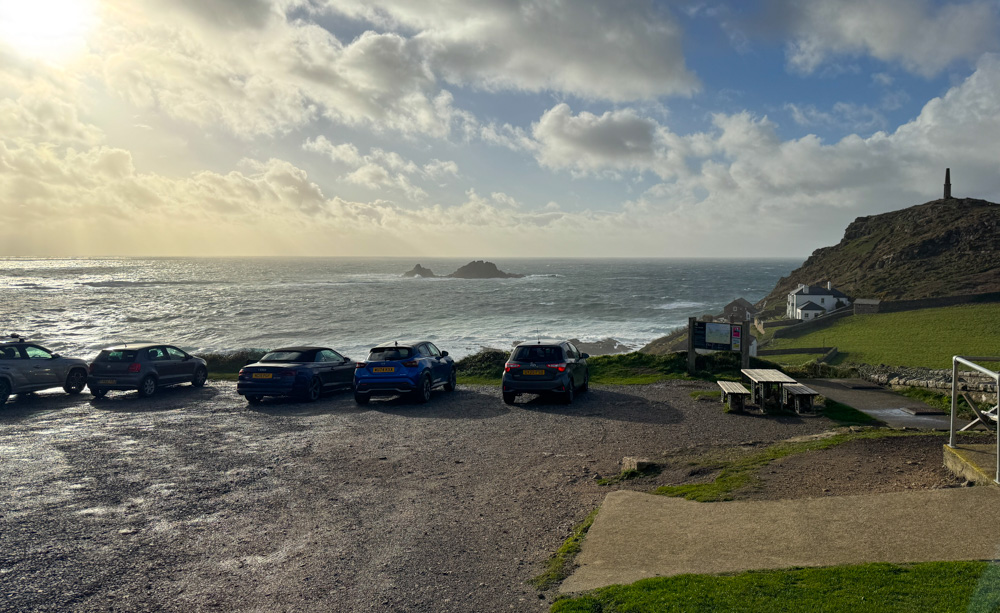
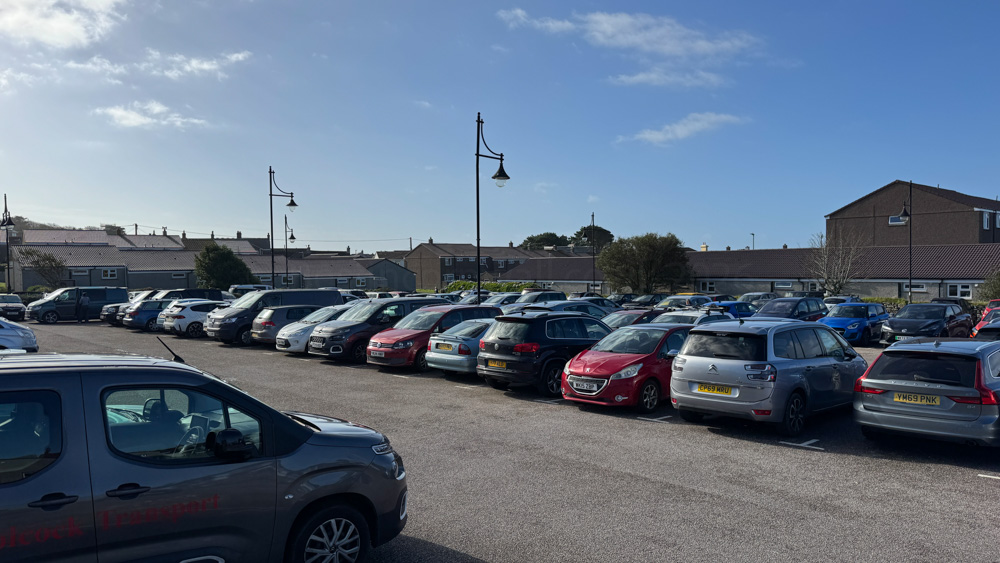
As a National Trust member, I park here for free. At this time of year the car park was fairly empty, and most of the cars were lined up at the front so their owners could sit in the car and enjoy the amazing view.
I could not scan my membership card because the screen was full of condensation, so on this occasion I left my card on the dashboard and headed down the path towards Priest’s Cove.
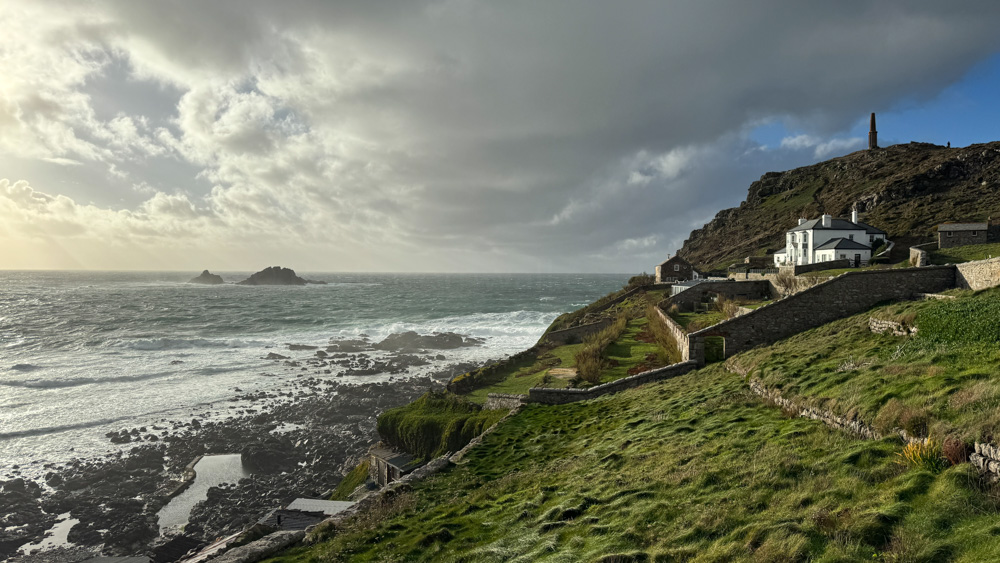
The view from the car park is stunning, and it is easy to understand why so many visitors are happy to enjoy it from the car park, especially on a cold windy autumn day.
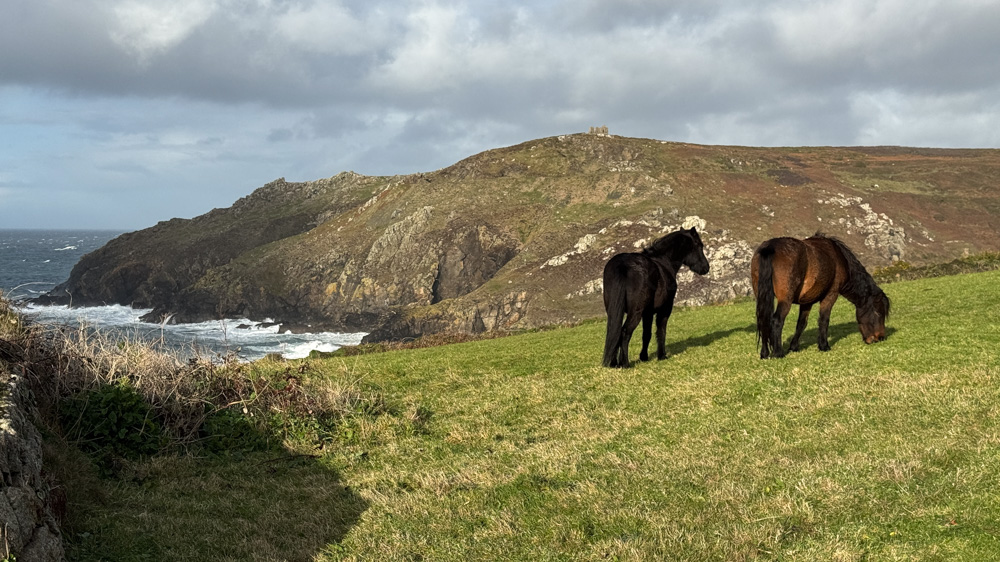
The National Trust uses ponies and cattle to graze the clifftops, which helps look after the habitats along this coast. If you are walking here with a dog, keep it on a lead around any grazing animals.
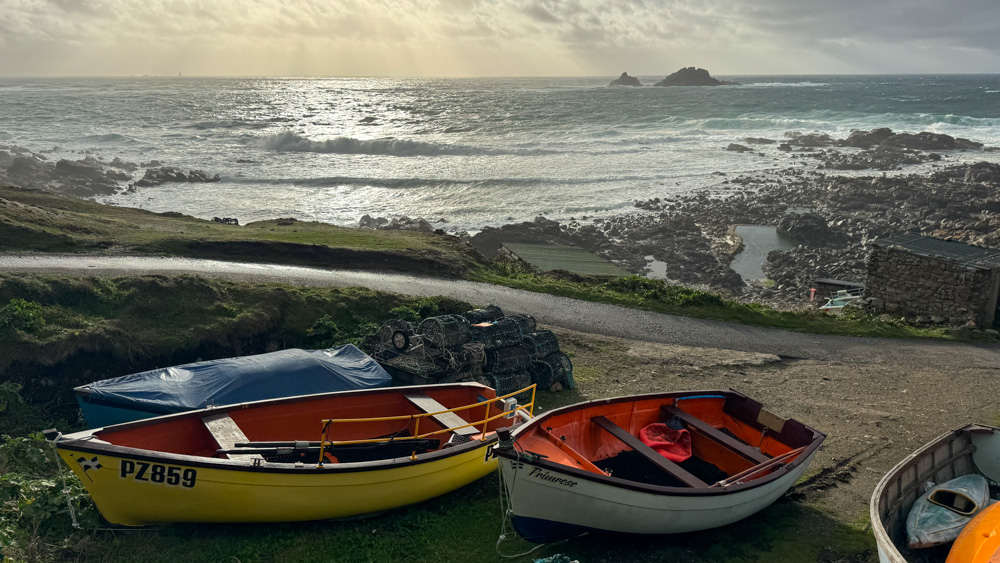
Just below the car park lies Priest’s Cove, tucked into the shelter of the Cape beneath its cliffs. It is a rocky little beach with a slipway and a handful of fishermen’s sheds beside it. It feels wild and rugged, and the old mine workings above the cove are a reminder of how industrial this coast once was.
Out to sea you can see the Brisons, a pair of offshore rocks that have picked up the nickname General de Gaulle in his bath. Many kinds of seabirds shelter there.
There is a seasonal ban on dogs on the beach and slipway at Priest’s Cove from Easter Sunday to 30 September, because it is a working slipway. Dogs on a lead are welcome on the footpaths around Cape Cornwall.
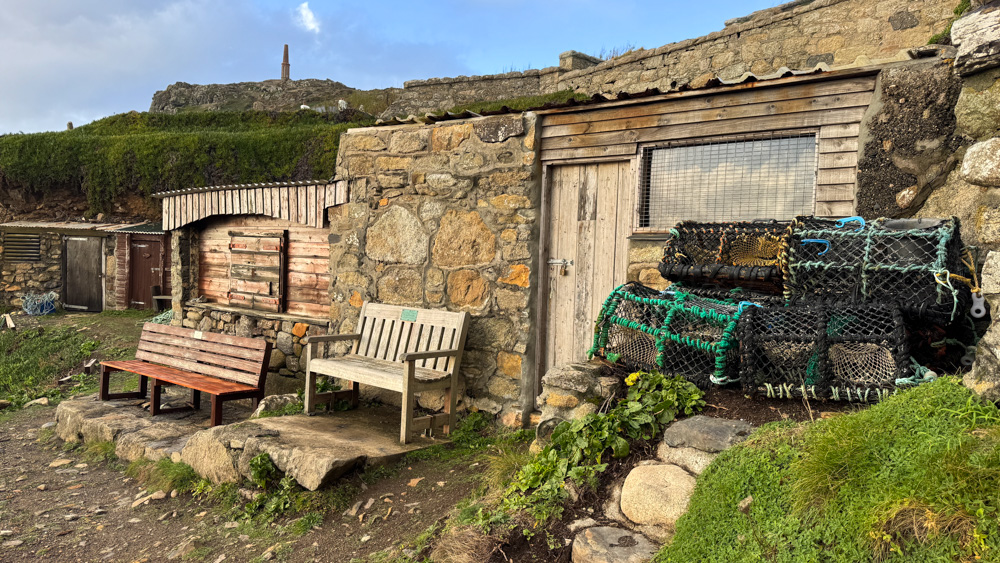
This is the perfect spot to sit and watch the waves crashing against the rocks. Years ago I sat here and hand fed a robin, which decided it wanted to share my sandwich with me.
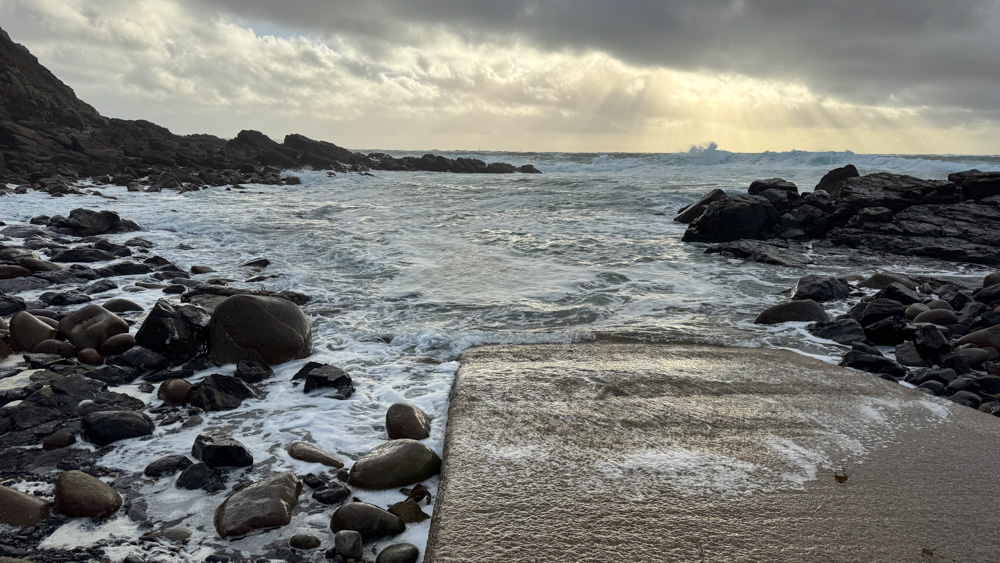
The tide was receding, but the sea was still pretty choppy because of the strong winds. There is something mesmerising about watching the waves surge up the slipway and drain back again.
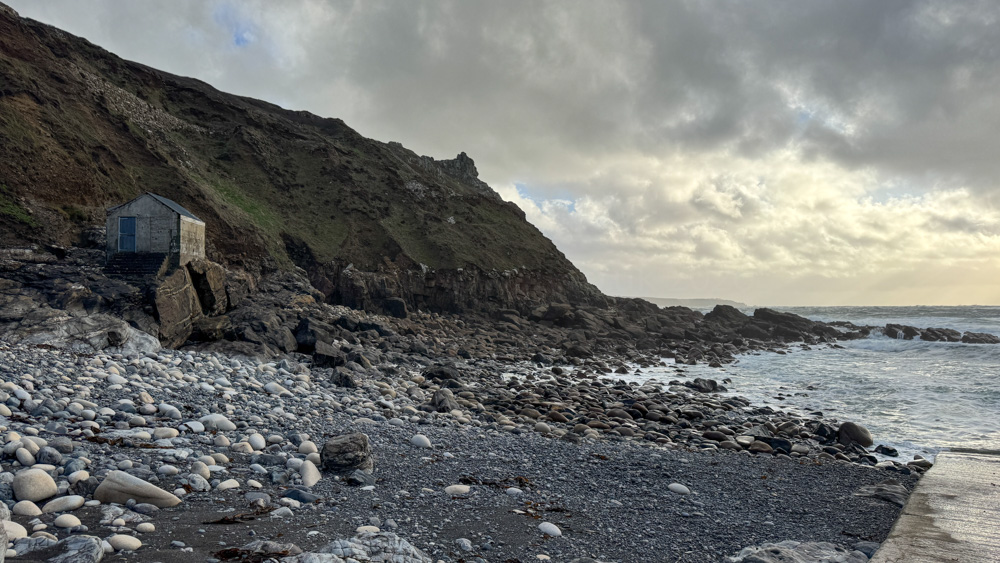
An abandoned fishing hut, a reminder of how much of this coast was shaped by working life.
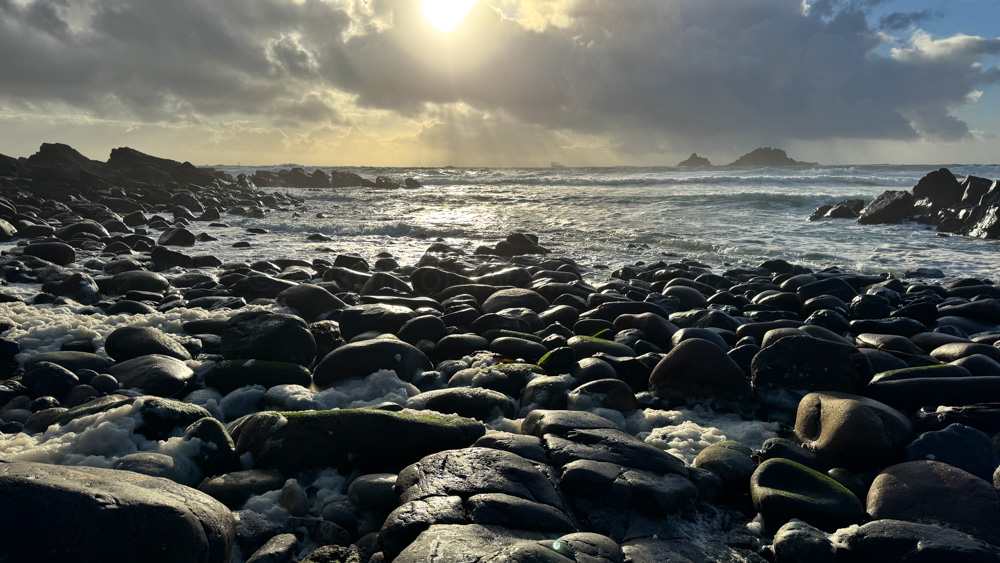
The late afternoon light was absolutely stunning, and it is one of the best reasons to visit at this time of year.
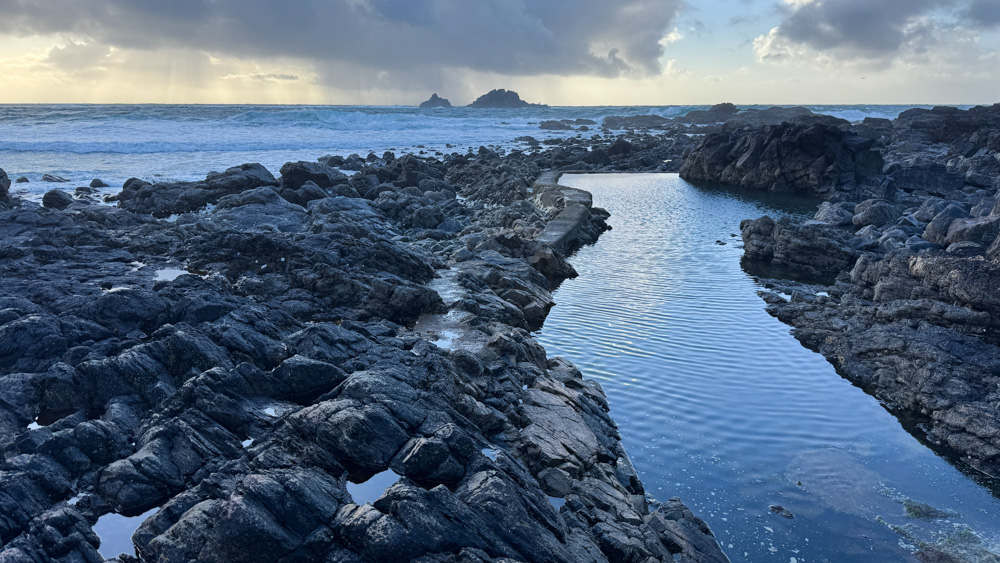
Tucked in among the rocks of Priest’s Cove is the tidal pool. It is shallow enough for paddling at one end and just deep enough for swimming at the other, which makes it a perfect wild swimming spot for families with small children. The sea fills it, so check the tide before you go.
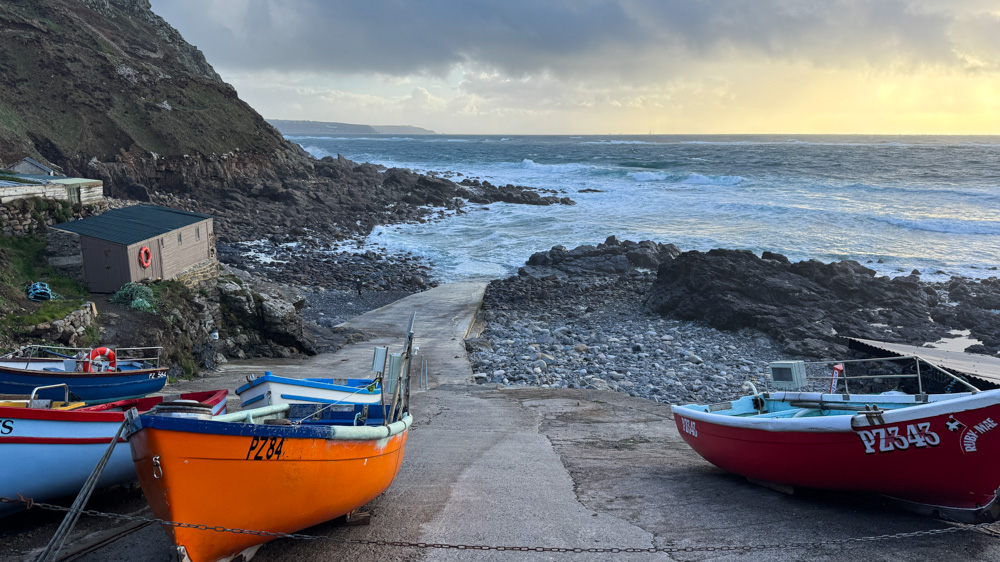
After exploring Priest’s Cove, I decided to walk up to the Heinz chimney. I took the easier route up the hill on this occasion.
It is worth knowing that the National Trust asks visitors to stay on the main footpaths here. This was once a mining area, and there are many old mine shafts and adits along the coast.
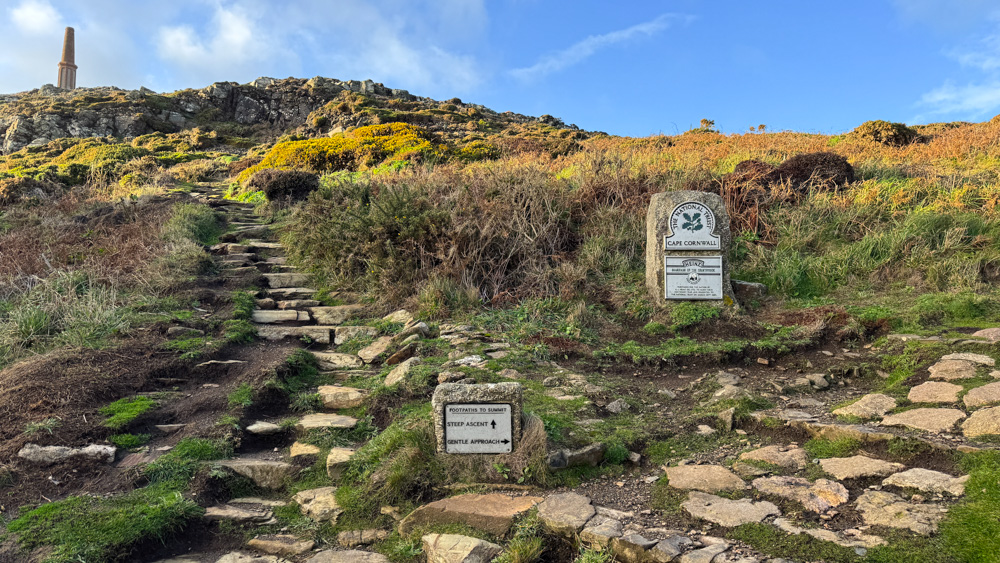
On this ocassion I took the easier route up.
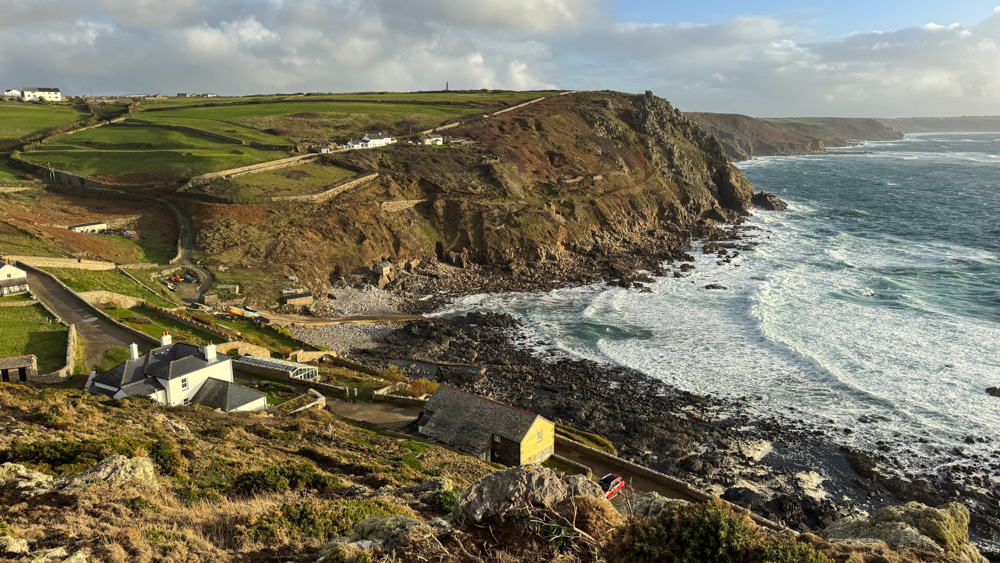
Looking back across Priest’s Cove from the top, it was blowing an absolute gale and I was struggling to stand up straight.
On a more romantic note, this is where I proposed to my wife Serena many years ago. Ahh.
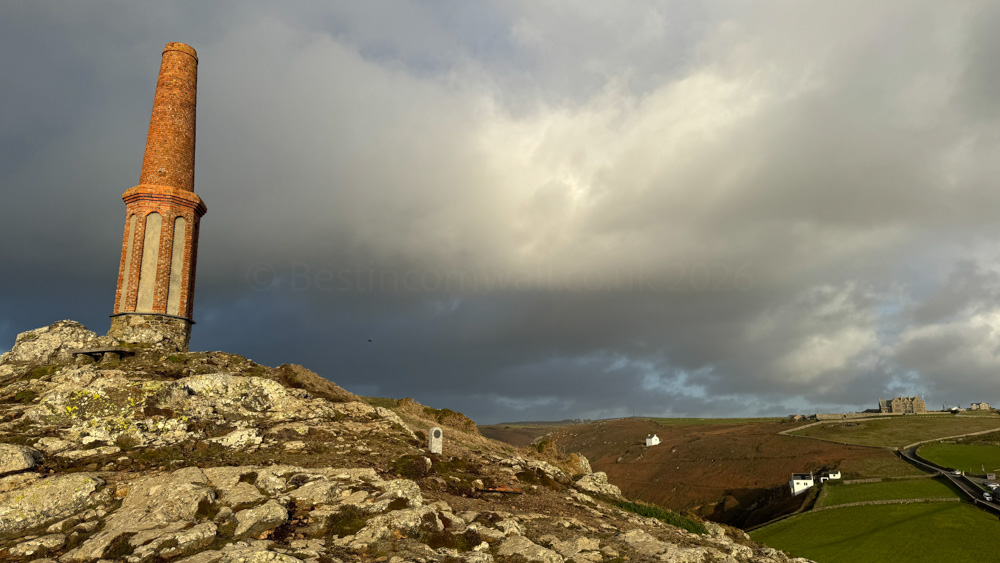
The chimney is the 1864 stack of the old Cape Cornwall Mine, which worked on and off between 1838 and 1883. It was left standing as a landmark for ships. It is known as the Heinz monument because the H. J. Heinz Company bought the headland in 1987, in its centenary year, and gave it to the National Trust. A plaque shaped like a Heinz Baked Beanz label is set into the base.
The large house standing above and behind the Cape is Porthledden House, in the far distance of my photo. It is a Grade II listed Arts and Crafts mansion, built between 1907 and 1910 for Francis Oats, a Cornish mining captain who rose to become chairman of De Beers. He hardly had time to enjoy it, because he died in South Africa in 1918.
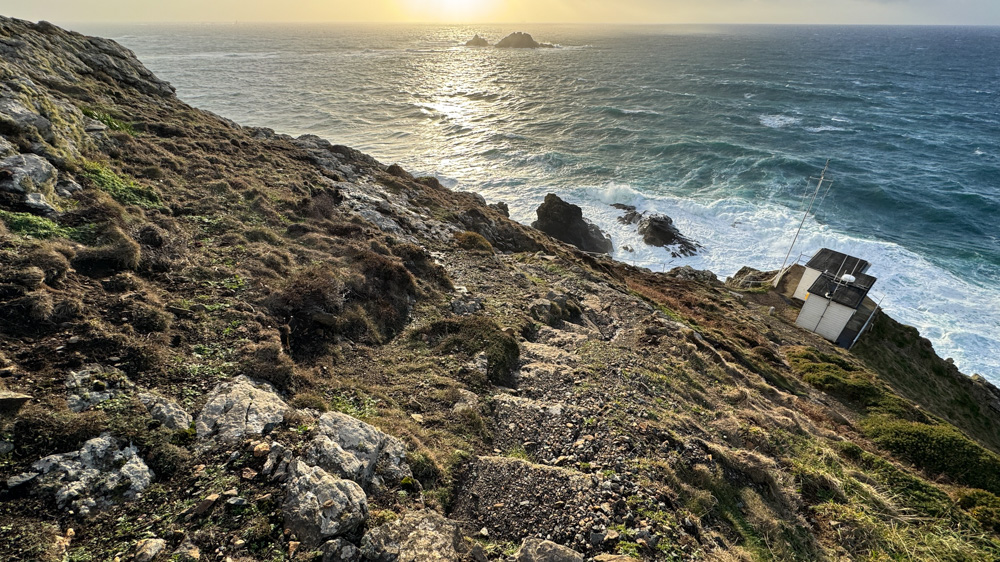
Heading down the other side means tackling steep and slippery steps, so make sure you are confident on your feet before you try it. The path takes you past the National Coastwatch Institution lookout, where volunteers have kept watch over the sea since 1996.
As I passed the hut I peered in through the window and made the watchman jump. I don’t think he was expecting visitors. Sorry about that!
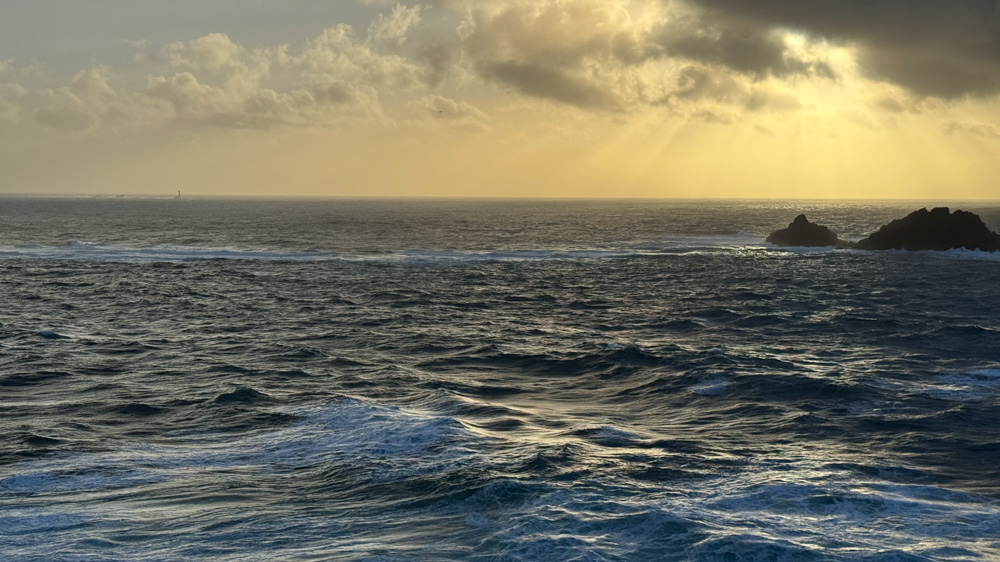
I love this spot at Cape Cornwall. It’s stunning at any time but when the seas are stormier than they were today, it really is a sight to behold.
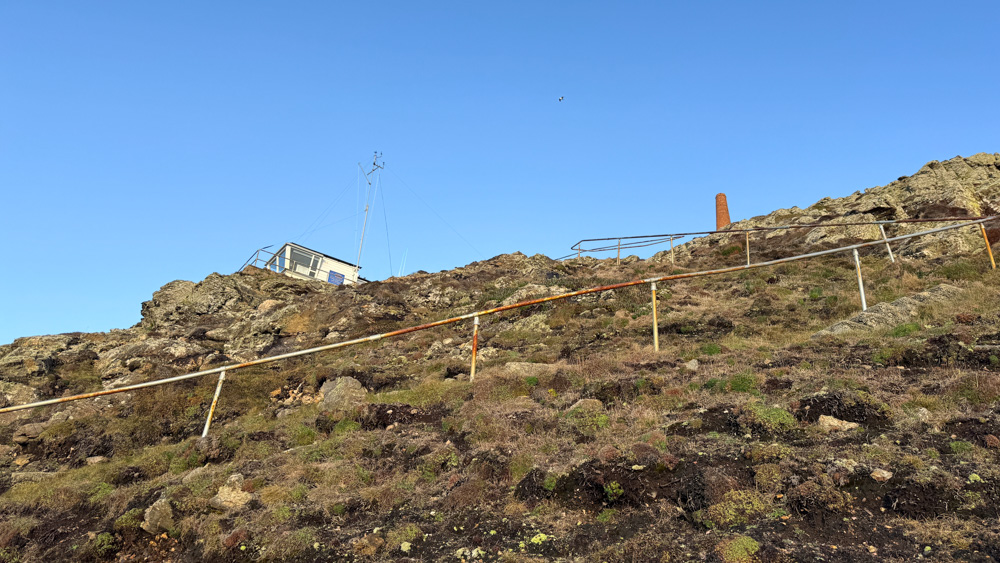
You can walk back up this way as well, as this photo of the steep path shows, but I think the easier route around the front is simpler and safer.
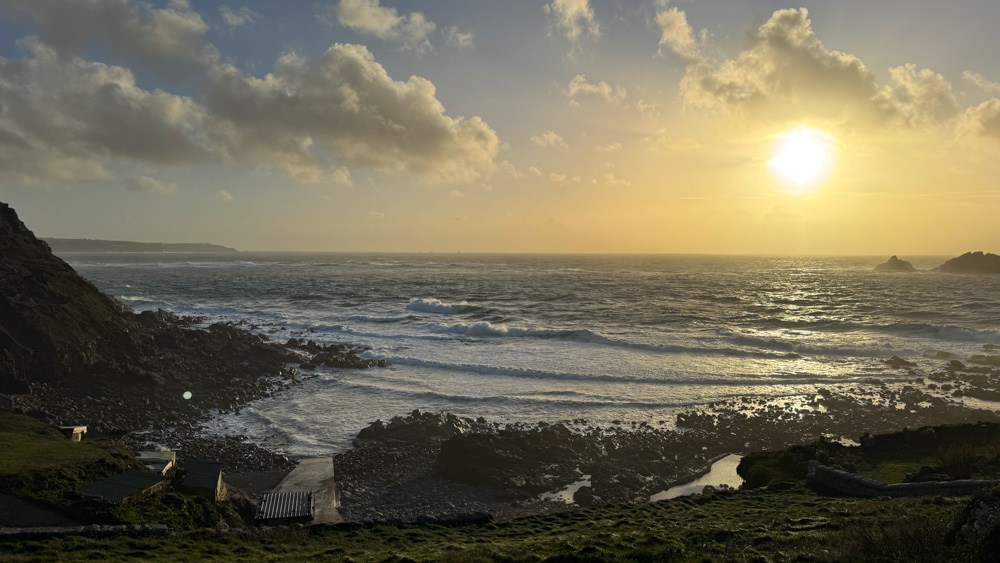
I walked around for a couple of hours, admiring the light, the view and the crashing waves. It is a great time of year to explore Cape Cornwall, because the drama of the place is turned up to 11. It is also a great place to watch the sunset.
I love coming here, and next time I will not leave it so long.
St Just Guides
The best places to park in St Just

The best things to do in St Just

The best places to stay in St Just

The best places to eat in St Just

Hi, I’m JV. As an ex travel photographer, I’ve been all over the world, but there’s nowhere else I’d rather call home than Cornwall. Now I’m putting that experience to work, finding the best of Cornwall for you. I hope you found this article useful. Please check out my socials below: