
Cornwall is the most photogenic county in England, and it is not close. Turquoise coves that pass for the Caribbean, cliffside engine houses, pastel harbours and Atlantic light that changes by the minute; if you shoot for a living, or for the algorithm, this is your studio. The catch is that everyone else knows it too. The difference between a scroll-stopping grid and a folder of the same shot half the internet already has comes down to timing, positioning and knowing which headland to stand on.
This is our Cornwall-wide overview for content creators. We cover the most Instagrammable regions, how to read the light and the tides, the drone rules you genuinely need to understand before you fly, and the practical stuff nobody warns you about, like where your signal drops out mid-upload. Treat it as your location-scouting base camp. When you are ready to go deep on a single town, we have linked our in-depth Padstow guide at the bottom.
Cornwall’s most photogenic regions
Cornwall roughly splits into three coasts, and each has a distinct visual signature. Knowing which you want saves you a lot of driving on single-track lanes.
The north coast: drama and scale. This is your cinematic Atlantic. Think Bedruthan Steps, where dark granite sea stacks cut through white surf, best shot wide from the clifftop at golden hour. Wheal Coates near St Agnes gives you the iconic engine house perched over blue sea, strongest in late afternoon. Tintagel’s modern footbridge is pure geometry at sunrise, and Bude Sea Pool mirrors the sunset when the tide is high and the water goes glassy. The north is big, moody and made for a wide-angle lens.
The far west: turquoise and ancient. The Penwith peninsula is where Cornwall does tropical. Pedn Vounder’s sandbars near Treen look identical to a Caribbean lagoon, but the shot is from the cliff path above, not the beach. Kynance Cove on the Lizard delivers red-and-green serpentine rock against electric turquoise at low tide. St Michael’s Mount and its tidal causeway is a fairytale leading-line composition, and the Minack Theatre carved into the Porthcurno cliffs is theatrical from the top row of seats. For minimalist creators, Lanyon Quoit on a misty morning is unbeatable.
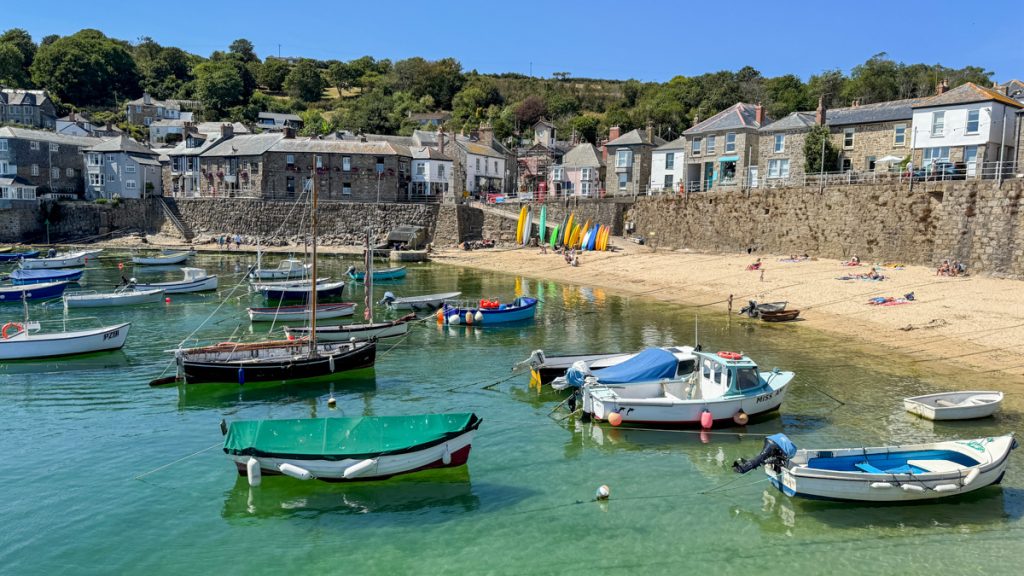
The south coast and estuaries: soft and painterly. Gentler, greener and more sheltered, the south is your calm-water reflection territory. Pastel harbour fronts, wooded creeks and boats sitting still on mirror-flat basins reward the early riser. Padstow on the Camel Estuary is the standout here, with its pastel cottages reflected in the inner harbour before the shops open.
Timing the light and the tides
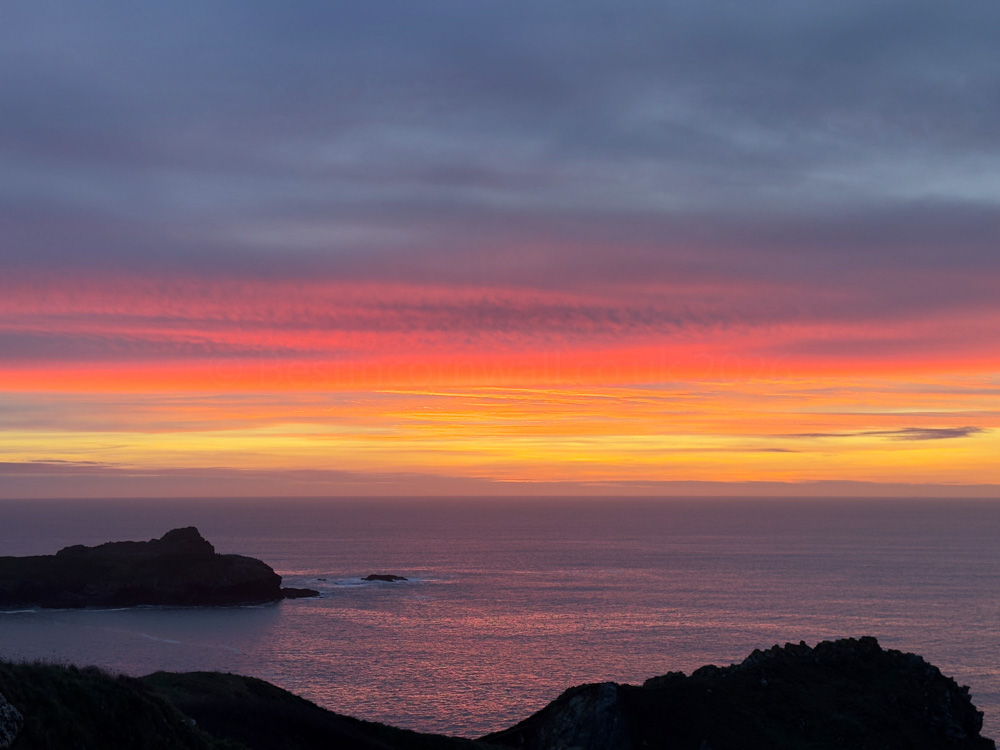
Golden hour does the heavy lifting in Cornwall, but which end of the day matters. Because the county runs east to west with coast on both sides, you can shoot sunrise on one coast and sunset on the other in a single day. As a rule, north-coast cliffs and west-facing coves glow at sunset, while east-facing harbours and estuaries come alive at sunrise.
- Sunrise is your secret weapon for anywhere popular. Padstow, Tintagel and St Ives are empty and softly lit before around 8am in summer. This is when you get the clean, crowd-free hero shot.
- Golden hour into blue hour is prime time for sea pools, lighthouses and harbours, when warm light gives way to that deep cobalt sky and village lights start to reflect in the water.
- Overcast days are not wasted. Flat white light is ideal for waterfalls, woodland and long-exposure seascapes, where you want to soften the surf into mist.
Check the tide before you commit to a location, not after. Half of Cornwall’s best compositions only exist at a specific tide. Pedn Vounder’s sandbars appear at low water, St Michael’s Mount causeway emerges as the tide drops, and Bude Sea Pool reflects best when it is full. A free tide-times app is as important as your camera, and always know your escape route; incoming tides cut people off on Cornish beaches every summer.
Drone zones and the rules you need to know
Cornwall looks purpose-built for drone footage, but flying here is more restricted than it appears, and getting it wrong can be costly. Before you launch:
- Register with the CAA. In the UK, if your drone weighs 250g or more, or has a camera, you need to pass the free theory test for a Flyer ID and register for an Operator ID. Follow the Drone Code on every flight.
- National Trust land is largely a no-go for take-off and landing. A huge amount of Cornwall’s most filmable coastline, including many of the cliff spots above, is National Trust owned, and it does not permit drone take-off or landing without prior written permission. You cannot lawfully launch from that land on a whim.
- Watch for airspace and sensitive sites. Newquay has a commercial airport with controlled airspace, and there are restrictions around Culdrose, harbours, and nature reserves where seabirds and seals breed. Never fly near cliff-nesting birds or hauled-out seals; disturbing them is an offence and it wrecks the very habitat that makes the shot.
- Crowds change everything. A clifftop that is legal and empty at 6am is a different proposition over a packed beach at midday. Fly early, fly considerately, and never over gatherings of people.
When in doubt, check the specific landowner’s policy and the latest CAA guidance before you travel. Rules tighten in peak season, and a polite ground-level shot always beats a fine.
Aesthetic cafes and creator-friendly stops
Cornwall’s independent cafe scene has caught up with its scenery. You will find whitewashed interiors, single-origin coffee and considered flatlays without much effort, particularly in the surf towns and art quarters. In Bude, the concept coffee shop and lifestyle store Temple is a genuinely design-led hangout for the hipster-cafe aesthetic. Along the north coast surf strip and throughout the west Cornwall art towns, look for beach-facing cafes with terraces that give you both the coffee flatlay and the sea backdrop in one frame.
West Cornwall doubles as an art trail worth building content around. The stretch from St Ives through Newlyn and Penzance to Marazion packs galleries, sculpture gardens and that famous luminous light into fifteen miles, with Tate St Ives, the Barbara Hepworth sculpture garden and the Tremenheere Sculpture Gardens near Penzance all offering strong architectural and green backdrops. A quiet gallery morning is a reliable rainy-day content plan when the coast is fogged in.
Signal, uploads and staying connected
Cornwall’s biggest practical enemy for creators is not the weather, it is the signal. Coverage is genuinely patchy once you leave the main towns, and many of the most dramatic locations sit in coastal not-spots.
- Expect strong 4G and 5G in the towns. Newquay, Truro, St Ives, Falmouth and Penzance are well served, so plan big uploads and live streams from there or from your accommodation.
- Assume dead zones on the cliffs and in the coves. Deep valleys, remote headlands and steep-sided harbours frequently drop to nothing. Do not rely on posting a Reel from the beach in real time.
- Shoot now, upload later. Capture on location, back up to your phone or an SSD, and schedule posts for when you are back on solid signal. Download your maps and tide times offline before you set off, because navigation apps fail on the same lanes your data does.
Filming etiquette and staying safe
Cornwall is a working, lived-in place, not a backdrop, and the content community here has a reputation to protect.
- Respect residents and fishermen. Harbours are workplaces. Do not block slipways, gear or doorways for a shot, and ask before featuring someone’s cottage or boat up close.
- Stay behind the barriers. Cliff edges erode and crumble without warning. No frame is worth stepping past a safety fence, and Cornwall’s clifftops have claimed people chasing exactly that shot.
- Leave no trace and do not name-and-drown fragile spots. Some of the county’s most beautiful coves are small and easily overwhelmed. Tag responsibly, take your litter, and follow the same tide and safety rules you would want a follower to.
- Give wildlife space. Seals, seabirds and their pups are easily disturbed. Use a long lens rather than getting close.
Get the timing, the tide and the etiquette right, and Cornwall will hand you a grid that looks like nowhere else in Britain.
Explore Cornwall for Content Creators by Area
This guide is your county-wide starting point. For a deeper, town-level breakdown of the best shots, light and stops, explore our in-depth area guide:
More town guides for creators are on the way.

Hi, I’m JV. As an ex travel photographer, I’ve been all over the world, but there’s nowhere else I’d rather call home than Cornwall. Now I’m putting that experience to work, finding the best of Cornwall for you. I hope you found this article useful. Please check out my socials below: