
Hayle does not shout. While St Ives fills with easels and ice cream queues, the estuary at Hayle sits quiet and silver at low tide, full of things worth watching if you are prepared to stand still for long enough. For the Vocal Local Birder, that is precisely the point. This is a town built around water and mud and reed, and it rewards patience over pace.
You are not here to tick off attractions. You are here to arrive before the light, find a spot with a clear line to the mudflats, and let the estuary do the rest. Hayle in Cornwall holds one of the most important stretches of wetland in the south west, and the birds that pass through it, or stay for the winter, do not care how many other visitors are in town. Set your alarm, bring two coats, and let us show you where to go.
The Hayle Estuary: Britain’s Most South-Westerly Refuge
The RSPB reserve at Hayle Estuary is the reason serious birders build a whole trip around this corner of Cornwall. It is the most south-westerly estuary in the UK, and in winter it holds staggering numbers, up to 18,000 migrant and wintering waterfowl pass through or settle here across the season. That is not a typo. That is a reason to come back more than once.
The reserve is really a complex of smaller sites rather than one single spot, and knowing which bit to visit at which state of the tide makes all the difference. Carnsew Pool and Copperhouse Pool sit closer to the town itself, both former industrial millponds now doing quiet duty as roosting sites. Ryan's Field and the viewing area known locally as the Passage look out over the open mudflats where the real spectacle happens. Further along, Lelant Saltings gives you a platform right beside the railway line, with the water almost close enough to touch.
What you are looking for depends on the season, but expect oystercatchers working the tideline, curlew probing the mud with that unmistakable curved bill, and little egrets standing pale and still against the dark silt. Winter brings large rafts of teal and wigeon, and if you are lucky and patient, the odd vagrant that has drifted in from somewhere it should not be. We would not rule out a Ring-billed Gull among the black-headed gulls if you are willing to sift through the flock.
Sunrise Access and Reading the Tide
This is not a beach you turn up to at noon. The estuary works on its own clock, and the best birding happens either side of high tide, when the rising water pushes waders off the exposed mud and concentrates them into tighter, closer groups near the roost sites. Sunrise adds the light you actually want, low and gold across the water, with none of the foot traffic that builds up once the town wakes.
Get there early enough and Copperhouse Pool can feel like your own private hide, particularly on a still, cold morning when the mist has not yet lifted off the water. If you are staying nearby, it costs you nothing but sleep to be stood at the water's edge as the first curlew calls drift across the mud. Bring a flask. You will be there longer than you plan to be.
What to Pack
- Binoculars, always. A decent pair of 8x42s will do more for you here than any amount of walking. Much of the best viewing is done standing still, glassing the far bank.
- A scope if you have one. The estuary is wide in places, and a scope turns a distant grey blob into a confirmed Wigeon.
- Layers, and then another layer. The wind off St Ives Bay does not care that it is technically spring. Waterproof boots are not optional if you plan to walk the fringes at low tide.
- A flask and a notebook. This is slow birding. You are here for hours, not minutes, and a log of what passes through is half the pleasure.
Beyond the Estuary: Quieter Corners
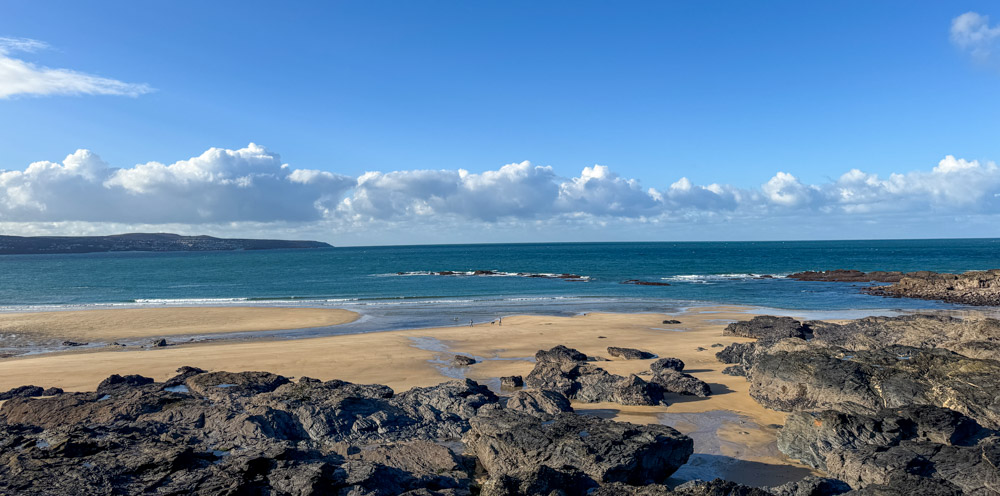
Hayle's three-mile run of beach, stretching from the estuary mouth out to Gwithian Towans and Godrevy, is not just a birding site, it is the whole town's identity. But the dunes and the headland beyond hold their own quiet rewards for anyone willing to walk a little further than the main car park.
Godrevy Point sits at the far end of the bay, with the lighthouse standing out on its island, the same lighthouse said to have inspired Virginia Woolf's To the Lighthouse. Seabirds work the water off the point, and the cliffs and rough grass behind it are worth a slow scan for anything moving low and fast. Seals often haul out on the rocks below, which is no bad thing to watch while you wait for something with wings to appear.
Hayle Towans, Cornwall's second largest dune system, gives you a completely different habitat within a short walk of the estuary. It is a Site of Special Scientific Interest for good reason, and the scrubby marram grass holds stonechats and wheatears on passage if you are patient enough to let them show themselves rather than chase them.
Trencrom Hill, a short drive inland, is worth the climb on a clear day. From the top you get views across to St Michael's Mount one way and back over the Hayle beaches the other, and buzzards and ravens use the thermals here in a way that rewards simply lying back on the grass and watching the sky for twenty minutes.
If the weather turns and the estuary is too grim even for you, Paradise Park on the edge of town is not wild birding, but it is worth knowing about. With well over a hundred species on site, it is a useful place to get your eye in on plumage and behaviour before heading back out to the reserve proper.
Where to Refuel Without Losing the View
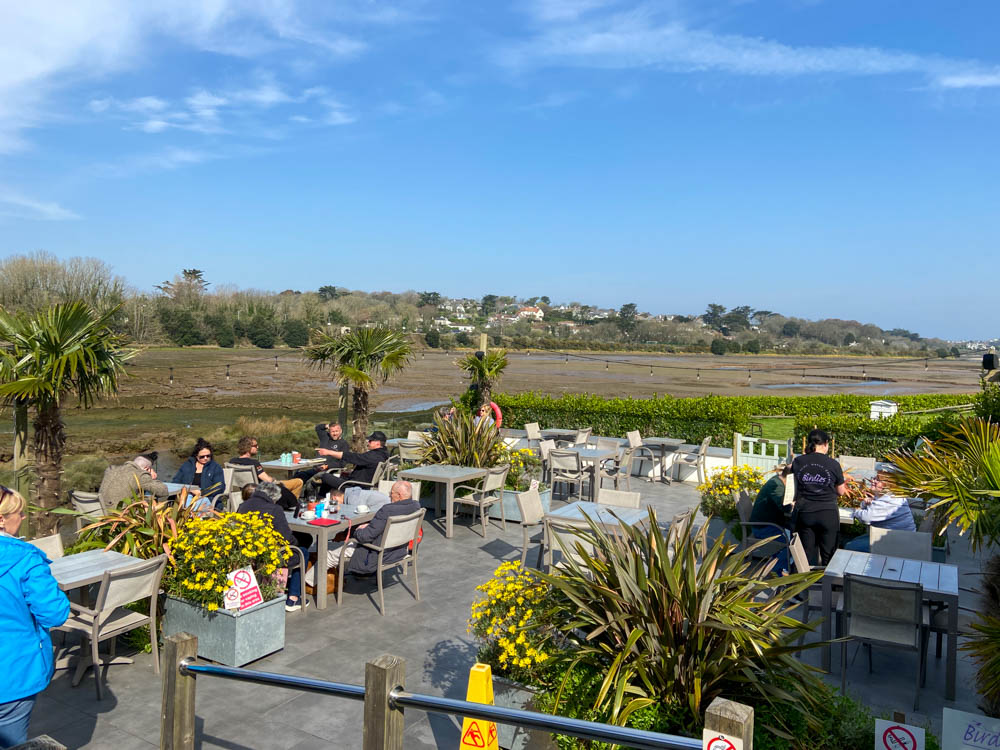
You should not have to choose between breakfast and birdlife. Birdies Bistro sits right on the edge of the RSPB reserve near Lelant Saltings, and the windows look directly out over the salt marsh, meaning you can watch egrets and curlew work the mud while your coffee cools. It is the obvious choice for anyone unwilling to leave the hide for a hot meal.
The Old Quay House, on the estuary edge itself, is a solid pub stop with a garden that runs down almost to the water, useful for a pint and a scan of the roost as the tide turns. For something quieter and slower, Duckies Cafe on Penpol Terrace does a good coffee and homemade cake if you just need to warm your hands between sessions.
Where to Base Yourself
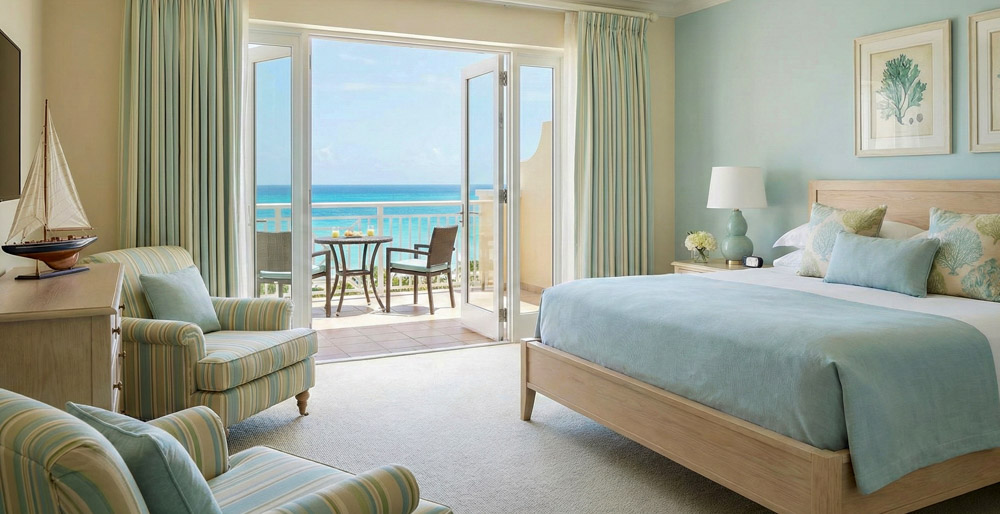
Stay close to the water and you buy yourself extra minutes of good light each morning. The Old Quay House, right on the estuary at Griggs Quay, is the obvious pick, with a garden that puts you within earshot of curlew calls before you have even had breakfast. It is a genuinely different way to wake up compared with most Cornish accommodation.
If you would rather base yourself among the dunes, the chalets scattered through Riviere Towans put you within a short walk of both the beach and the estuary path, with none of the crowds you get closer to St Ives. Families wanting a proper St Ives Bay holiday park in Hayle, Cornwall, with pools and entertainment laid on, tend to head for Haven Riviere Sands; it sits well back from the estuary itself, so if quiet is your priority, treat it as a base for evenings rather than a birding vantage point. Riviere Sands, Hayle, does at least put you within a short drive of Gwithian and Godrevy for an early start.
Practical Notes for the Patient Birder
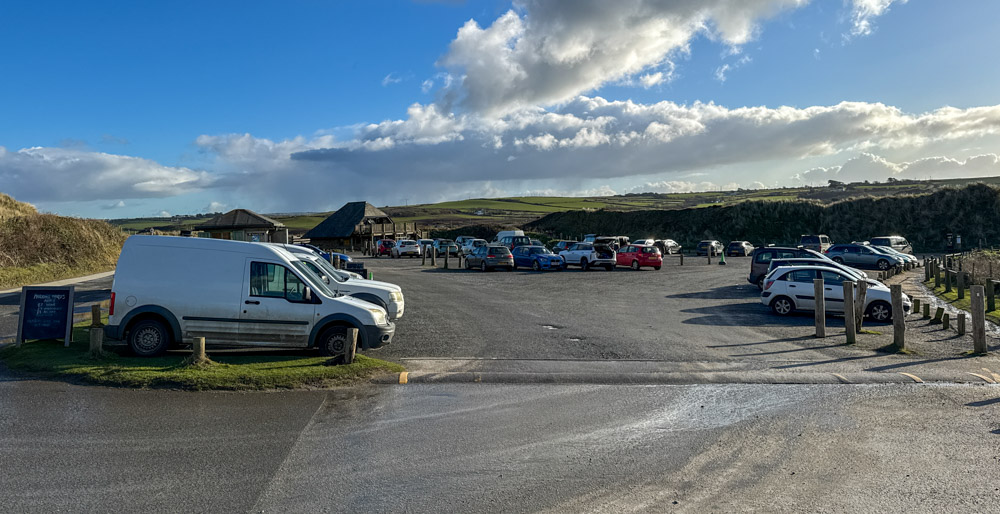
Parking near the reserve is straightforward if you know where to look. Lelant Saltings has its own car park, doubling as a Park and Ride, which sits right beside the viewing platform, useful if you want to leave the car and walk straight into position. For Copperhouse Pool, town centre parking at Commercial Road is a short walk away.
Tides matter more than tide tables ever suggest they will. Check the timings before you set out; a couple of hours either side of high water gives you the best concentration of birds close to the paths, while low tide scatters everything across acres of open mud.
Winter is the season to build a trip around, when the numbers are at their peak and the estuary is at its most dramatic, but do not write off spring and autumn passage, when scarcer migrants pass through on their way somewhere else entirely. Whatever the season, keep to the paths, keep your voice down, and let the estuary come to you.
Hayle Guides
The best places to park in Hayle
The best things to do in Hayle
The best places to stay in Hayle
The best places to eat in Hayle
Hi, I’m JV. As an ex travel photographer, I’ve been all over the world, but there’s nowhere else I’d rather call home than Cornwall. Now I’m putting that experience to work, finding the best of Cornwall for you. I hope you found this article useful. Please check out my socials below: