
Cornwall has a stronger claim on modern British art than anywhere outside London. It is not a coincidence, and it is not tourist-board spin. West Cornwall, the peninsula running west of Penzance, holds a concentration of galleries, working studios and cultural institutions found nowhere else in England, and it has been pulling painters, potters and sculptors down the A30 for more than 150 years. The reason people usually give is the light: clear, maritime, luminous, bouncing off sea and sky around the bay. It is more artistic lore than hard science, but generations of serious painters have made the pilgrimage to see it for themselves, so there is clearly something in it.
If you love art, Cornwall rewards you twice over. There is the work itself, hung in world-class galleries and modest harbour-front spaces alike, and there is the landscape that produced it, still there to walk through. This is a broad overview of what Cornwall offers art lovers: the movements that made it, the galleries and sculpture gardens worth your time, the trails that string them together, and where to pick up a brush yourself. For the deep-dive on the single most important art town, see our St Ives guide linked at the end.
Why Cornwall became an artists’ colony
Two things turned a working county of fishing ports and tin mines into an art destination: the quality of the coastal light, and cheap living. In the 19th and early 20th centuries, artists could rent a studio and eat well on very little, in scenery that was dramatic and largely unpainted. What started with a handful of visiting painters gradually became a genuine hub, first for open-air realism, later for abstraction. The narrow peninsula did the rest. St Ives, Newlyn, Mousehole, Marazion and Penzance all sit within 15 miles of each other, so a colony in one town fed the others.
The St Ives School and British Modernism
Painters were working in St Ives from the late 1800s, drawn to its harbour scenes. Things shifted decisively after the Second World War, when a remarkable group settled in the town and turned it into a centre for British modernism and abstraction. The names still define 20th-century British art: the sculptor Barbara Hepworth, the painter Ben Nicholson, Peter Lanyon, and the self-taught fisherman-painter Alfred Wallis, whose naive harbour scenes influenced far more sophisticated artists than himself. Bernard Leach set up his pottery here in the 1920s, with a strong claim to being the birthplace of British studio pottery. The legacy culminated in Tate St Ives opening on the seafront above Porthmeor Beach in 1993.
The Newlyn School and open-air painting
The Newlyn School predates the St Ives modernists by a couple of generations. Through the late 1800s and early 1900s, the communities of Newlyn, Mousehole and Lamorna became a thriving centre for painters who worked outdoors, or “en plein air”, capturing fishing life and the coast as they found it. Their canvases are now widely prized. The best place to understand the movement is Penlee House Gallery and Museum in Penzance, set in a Victorian house with its own park, which holds work by leading figures including Stanhope Forbes, Walter Langley and Norman Garstin. Penzance also gave the region one of Britain’s first provincial art schools, founded in 1853, which later taught St Ives painters including Peter Lanyon.
Galleries and museums worth your time
The cluster stretches across five towns, which is what makes a proper art itinerary possible.
- St Ives: Tate St Ives for modern and contemporary British art with deep local roots; the Barbara Hepworth Museum and Sculpture Garden at her former Trewyn Studio; the Leach Pottery, still a working studio and museum; and the Penwith Gallery for local work in a sensitively renovated space.
- Newlyn and Penzance: Newlyn Art Gallery, custodian of the Newlyn School heritage, and its glass-fronted sister site The Exchange in Penzance, which shows cutting-edge contemporary work. Penlee House for the Victorian and Newlyn School collections, and Cornwall Contemporary for current shows.
- Marazion: a small but genuine gallery town, with the Summerhouse Gallery, Market House Gallery and Marazion Gallery all showing local and established artists within a short walk of St Michael’s Mount.
- Hayle: the Foundry Gallery, the oldest established gallery in the town, mixing vintage and contemporary paintings, photography, ceramics and antiques.
Sculpture and art in the landscape
Some of the most memorable art in Cornwall is not on a wall at all. Tremenheere Sculpture Gardens, a ten-minute drive from Penzance, sets eco-conscious sculpture and site-specific installations into a sheltered subtropical valley, with long views over Mount’s Bay and a good modern restaurant on site. It is one of the most distinctive arts venues in west Cornwall. The Barbara Hepworth garden in St Ives works on the same principle at a more intimate scale: most of the bronzes still stand exactly where Hepworth placed them, which gives the space a personal feel a conventional museum never manages.
Following the west Cornwall art trail
Because the towns sit so close together, you can build a credible multi-day art trail without much driving. A natural loop runs from St Ives over to Penzance and Newlyn, out to Mousehole and Marazion, with Hayle and Tremenheere folded in. Do not overpack the days; the point of Cornwall is to leave time to walk the coast between galleries. The South West Coast Path has furnished subjects for painters for centuries, and a slow stretch of it, sketchbook in hand, is as much a part of the trip as any exhibition.
Try it yourself: workshops and courses
Cornwall is unusually good for having a go rather than just looking. Newlyn School of Art in Newlyn runs some of the most respected short courses in the country, led by working regional artists, covering plein air painting, contemporary textiles, landscape and portraiture. In Penzance you will find watercolour tuition, etching and print workshops, and relaxed community drop-in oil painting sessions. Pottery studios within reach of Penzance run taster days through to week-long intensive courses at the wheel. In St Ives, the St Ives School of Painting continues a long teaching tradition, and Tate St Ives runs its own programme of talks and practical sessions. If a course matters to your trip, book well ahead, as the best ones fill early.
The creative calendar
Time your visit around a festival if you can. Penzance runs a strong programme through the year, and its galleries lean into it. Golowan is the big midsummer celebration of Cornish arts, with street entertainment, music and gallery exhibitions across the town. Later in the year, the Montol Festival marks the winter solstice with costume, masks and processions, a treat for anyone with a visual eye. Dates shift year to year, so check ahead before you plan around them.
Planning your art trip
Getting here: Penzance is the final stop on the Great Western main line, around five hours direct from London Paddington, or overnight on the Night Riviera Sleeper. St Ives sits at the end of a short, scenic branch line from St Erth. By car, it is the A30 all the way west.
Getting around: the towns are close, but summer traffic and parking in St Ives are notoriously difficult. Trains and local buses link the main centres, and using them removes the biggest headache of an art-hopping trip.
When to go: spring and autumn give you the galleries at their calmest and the light many painters prize, without the peak-season crowds. Always check current opening hours and ticketing before you travel, as these change; the Tate and Hepworth sites, for example, are separately ticketed.
Explore Cornwall for Art Lovers by Area
We are building out our art coverage town by town. Our first in-depth guide covers the town at the heart of it all:
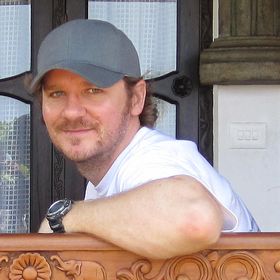
Hi, I’m JV. As an ex travel photographer, I’ve been all over the world, but there’s nowhere else I’d rather call home than Cornwall. Now I’m putting that experience to work, finding the best of Cornwall for you. I hope you found this article useful. Please check out my socials below: