Few places in Cornwall reward a slow, curious traveller quite like Tintagel. This is not a village you tick off in an afternoon; it is a layered site where you can trace the county's story from Bronze Age carvings cut into a slate gorge, through a Dark Age trading stronghold, to a 13th-century castle built to borrow the glamour of a legend. If you are the sort of visitor who reads every plaque, lingers over interpretive panels and wants the archaeology as much as the myth, Tintagel gives you generous material to work with.
The headline act is Tintagel Castle, but the real pleasure here is how much genuine heritage sits within walking distance of the high street. A 14th-century manor house, a lonely Norman church on the cliff edge, a valley of prehistoric labyrinth carvings and a pair of historic inns that have poured for travellers since the medieval period. Come out of season if you can, take the whole day, and read Tintagel the way it was built up, one stone layer at a time.
Tintagel Castle and its Dark Age history
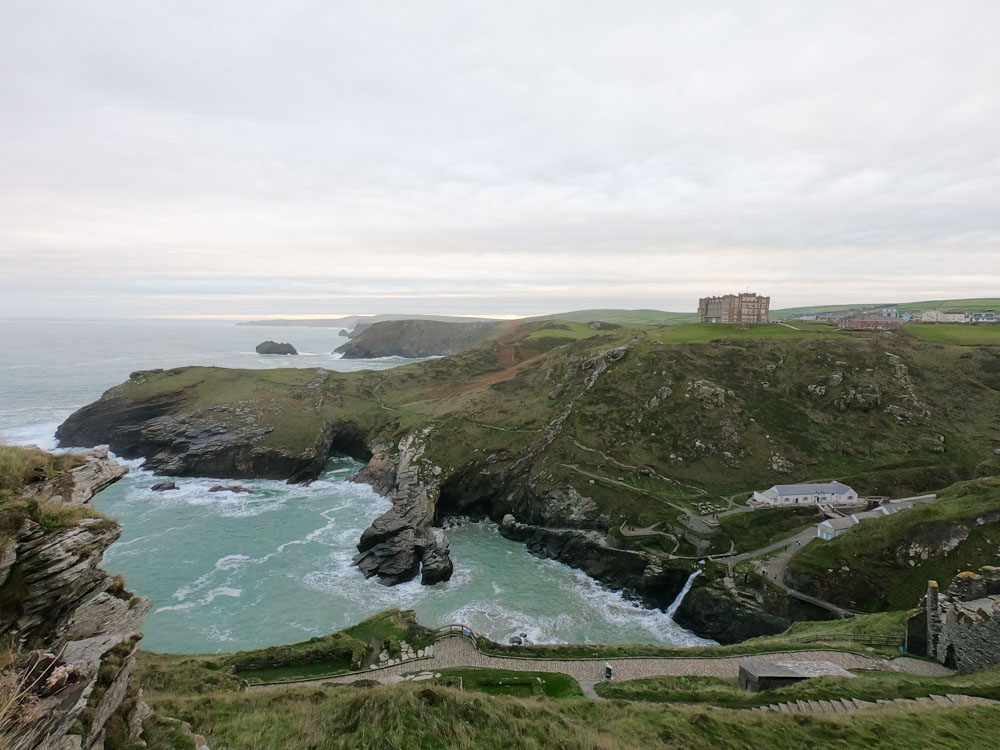
Tintagel Castle is the reason most people come, and it earns the billing. Long before the medieval castle you see today, the headland was a stronghold of the Cornish rulers of Dumnonia, occupied from around the 5th to 7th centuries. Excavations have turned up fragments of fine pottery and glass from the Mediterranean and beyond, hard physical evidence that this windswept outcrop sat on a luxury trade network reaching across the known world. For a history lover, that is the detail worth pausing on: this was not a remote backwater but a place of wealth and long-distance connections.
The romantic ruins that dominate the island came later. In the 1230s, Richard, Earl of Cornwall, built a castle here despite the site's limited strategic value, deliberately playing on Tintagel's growing reputation as the place of King Arthur's conception in Geoffrey of Monmouth's tales. It is one of the earliest examples of heritage marketing in Britain, a nobleman buying into a legend to lend himself prestige.
- Cross the bridge: English Heritage's cantilevered footbridge recreates the line of the original medieval crossing, spanning the chasm where the natural land bridge collapsed centuries ago. Walking the gap with the sea churning far below is the best possible introduction to why this site was chosen.
- Read the interpretation: The island panels do a careful job of separating the archaeology from the Arthurian myth. Take your time with them; the Dark Age story is arguably more remarkable than the legend.
- Gallos: The 8ft bronze figure on the headland, often read as a nod to the site's royal past, is a modern piece but a striking one against the Atlantic horizon.
- Merlin's Cave: At low tide you can walk the beach below and step into the sea tunnel that cuts clean through the headland. The Arthurian association is Victorian in origin, popularised by Tennyson, but the geology is genuinely ancient.
Entry is timed and ticketed, and it sits at the higher end for a Cornish site, so book a slot in advance and allow at least a couple of hours on the island alone.
Medieval Tintagel: the Old Post Office
On the high street, the National Trust's Old Post Office is one of the most photographed buildings in Cornwall, and one of the most rewarding to actually go inside. Despite the name, this is a 14th-century medieval manor house, its slate roof famously buckled and undulating with age. It only served as a post office for a stretch of the Victorian era, which is where the name stuck.
- What to look for: The uneven floors, the smoke-blackened hall and the small-scale domestic rooms give an honest picture of medieval and later cottage life, far removed from grand-estate polish.
- The garden: The cottage garden at the back is a quiet spot to sit with your notes, well away from the crowds funnelling down to the castle.
King Arthur’s Great Halls
This one is a curiosity, and all the better for it. King Arthur's Great Halls was built in the 1930s by Frederick Thomas Glasscock, a wealthy retired custard manufacturer, as a monument to the Arthurian legend and the chivalric order he founded around it. It tells you as much about early 20th-century enthusiasm for the Arthur myth as it does about Arthur himself.
- The stained glass: The main hall holds 72 stained glass windows depicting the knights and their story, alongside carved granite thrones. The scale and the craftsmanship are genuinely impressive.
- Why it matters: For anyone interested in how legends are revived and reshaped by later generations, this is a fascinating case study in Victorian and inter-war Arthurian revival.
St Materiana’s Church
Walk out to the windswept headland at Glebe Cliff and you reach St Materiana's, a Norman church dating largely to the 12th century, standing alone above the sea. After the noise of the high street, the contrast is stark and welcome. This is a working parish church with genuine age in its fabric, dedicated to an early Cornish-Welsh saint, and it speaks to the deep Celtic Christian roots of the area.
- Inside: Look for the Roman milestone re-used within the church, a small but telling reminder of how many layers of history overlap on this stretch of coast.
- The setting: Many locals rate the churchyard as the finest sunset spot in the village. It is a fittingly contemplative place to end a day of reading the landscape.
Prehistoric Tintagel: Rocky Valley
For the deep-time enthusiast, the walk north along the coast path towards Boscastle leads to Rocky Valley, a narrow slate canyon carved by the Trevillet River. Behind the ruins of an old mill, cut into the exposed rock face, are two labyrinth carvings. Their age is genuinely debated, with some attributing them to the Bronze Age and others to the mill era, but they are unlike anything else you will find in the UK and well worth the pilgrimage.
- The mystery: Nobody can say for certain who cut them or why, which is exactly the sort of unresolved puzzle that makes this stop memorable.
- Nearby: Combine it with St Nectan's Glen at Trethevy, a 60ft waterfall in ancient woodland long regarded as a spiritual site, where visitors still tie clooties to the trees.
Historic pubs and where to refuel
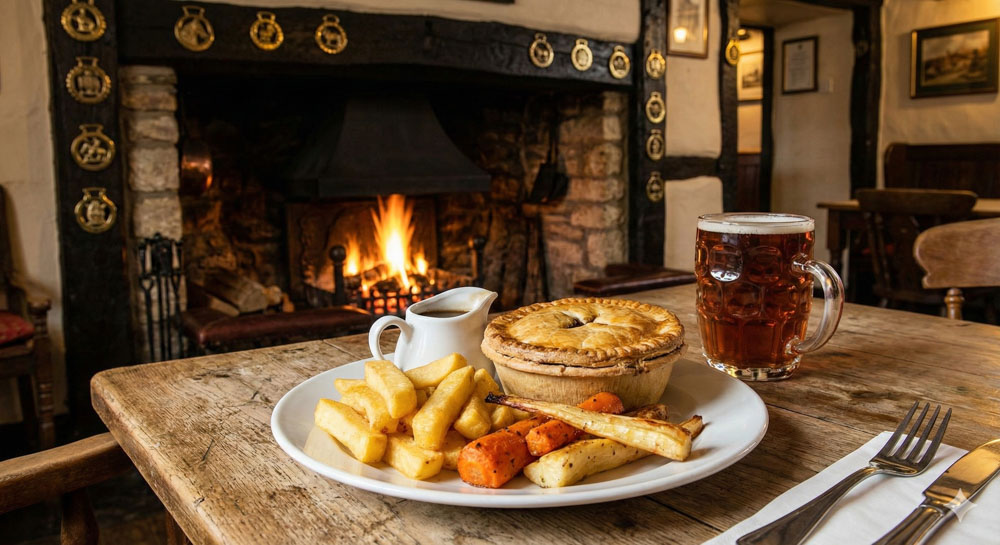
Tintagel keeps its history alive at the table too. King Arthur's Arms on the main street has stood in the village since the 14th century, and it delivers exactly what you want after a day on the cliffs: generous pub classics, from steak and ale pie to fish and chips, in a bustling, family-friendly room. For an evening meal, The Olive Garden, tucked just off the high street, is the reliable choice for good Italian cooking with fresh Cornish ingredients, and it is small, so book ahead.
No history walk here is complete without a pasty. Pengenna Pasties in the centre of the village works from a family recipe handed down for generations, and you can watch the crimping through the window. Taking a steak pasty out to the cliffs is a Tintagel ritual worth keeping. For a lighter stop, Charlie's Cafe is a good deli-cafe for building a picnic, while the lounge at the Camelot Castle Hotel offers a cream tea with what may be the most dramatic castle-and-Atlantic view in Cornwall.
Guided tours and going deeper
To get the most from Tintagel's layered story, it pays to add some structure to your visit.
- English Heritage on site: The castle's own interpretation, seasonal talks and family-friendly living-history events are the best starting point for the Dark Age and medieval history.
- Coastal path context: The South West Coast Path runs straight through the village, and walking the sections towards Boscastle or Trebarwith Strand is the clearest way to understand why the headland was settled and defended.
- Wider Cornish archive: If Tintagel sparks a deeper research itch, Kresen Kernow in Redruth holds over 850 years of Cornish manuscripts, maps and records, ideal for chasing local lineage or medieval history once you are back off the cliffs.
Practical tips for history lovers
- Go slow, go early or late: The village and castle are busiest in the middle of the day in summer. Arriving early or visiting out of season gives you room to read every panel in peace.
- Book the castle in advance: Entry is timed and ticketed, and slots sell out on busy days.
- Mind the tides: Merlin's Cave is only accessible at low tide, so check the tide table before you plan your day around it.
- Wear proper footwear: The walk down to the castle and back up is steep, the island paths are uneven, and the coast path to Rocky Valley crosses valleys. A summer Land Rover shuttle can save your legs on the castle approach.
- Free heritage, too: St Materiana's Church, the Rocky Valley carvings and the coast path cost nothing, so a rich history day here need not be expensive.
Tintagel Guides

The best places to park in Tintagel

The best things to do in Tintagel
The best places to stay in Tintagel